
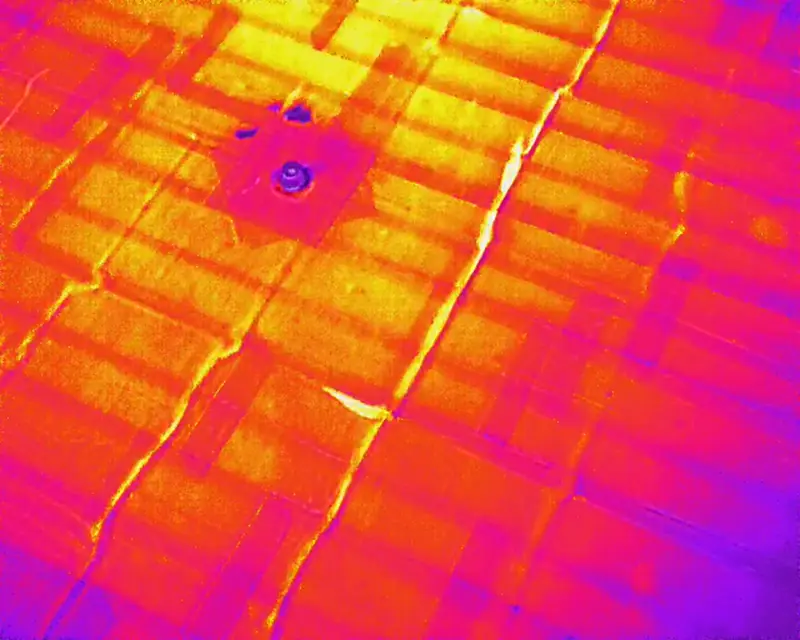
Drone thermal inspection
Find heat loss, likely moisture areas and equipment that appears to be running hot on your roofs and buildings, without scaffolding, a lift or walking on the membrane.
Property managers, owners and contractors
Aerial thermography is useful when you need to prioritize repairs, document a roof's condition before work, or check a building envelope after comfort complaints.
- Commercial, industrial and institutional flat roofs
- Rental buildings and multiplexes held by investors
- Walls, thermal bridges and openings
- Rooftop units, panels and visible electrical installations
The right timing makes the right image
Thermal imaging depends heavily on conditions. For a roof, the best results often come in the evening after a sunny day, when wet materials release heat more slowly. For a heated building envelope, we look for a strong indoor-outdoor temperature difference, typically in the cold season.
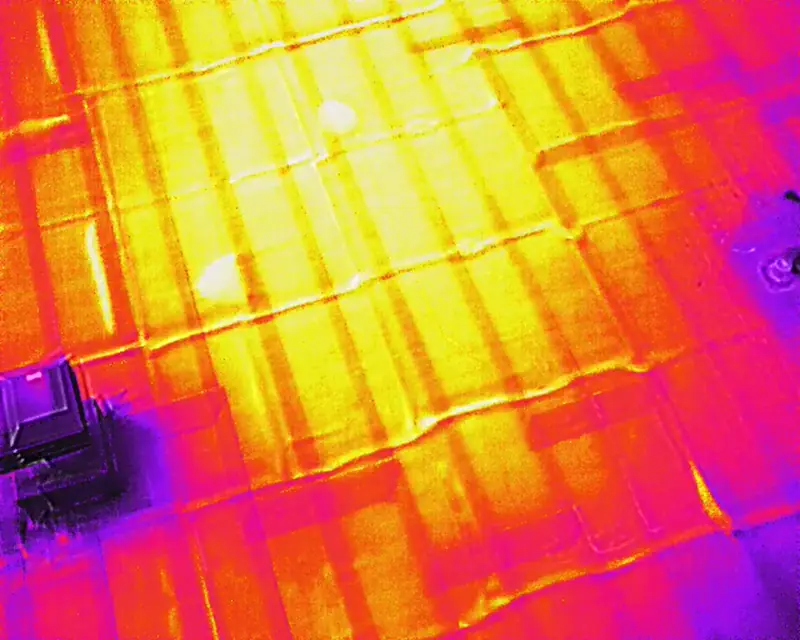
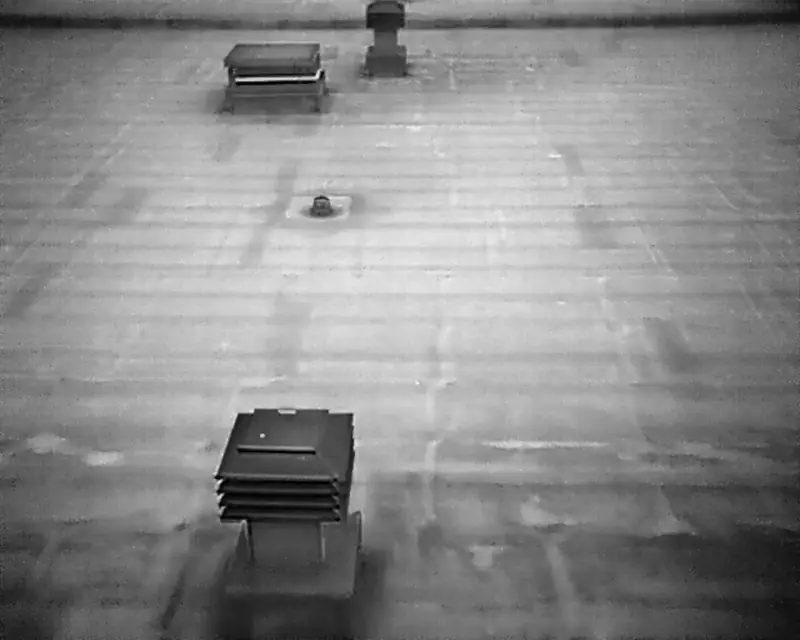
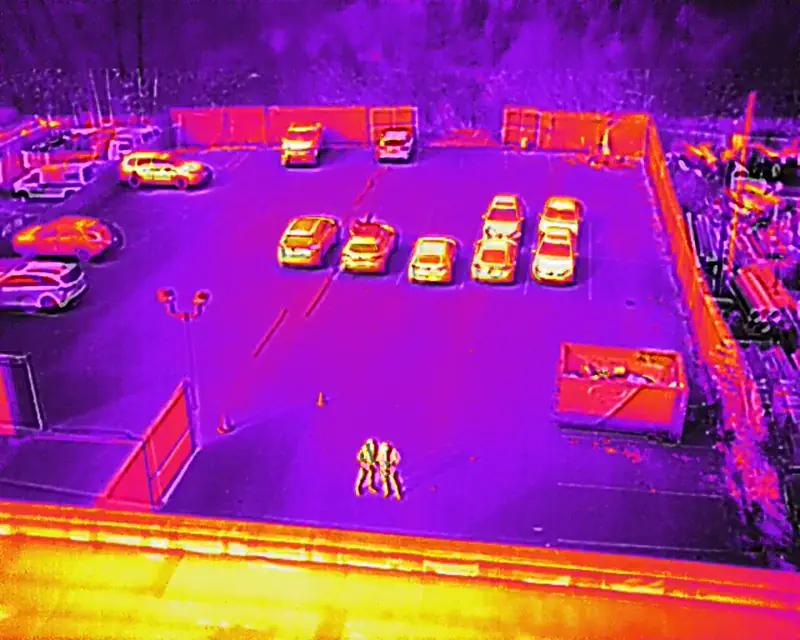
We plan the flight window around weather, wind, humidity and sun exposure, then capture thermal and visible images of the same areas side by side to make them easier to read.
A look at the data
What you receive
- Radiometric thermal images with matching visible images
- Illustrated report of apparent anomalies, located on an overview image
- Documented capture conditions (date, time, weather)
- Recommendations for on-site verification
- Thermal video when needed
File formats are agreed in the quote, based on your software and needs.
What you should know
- A thermal image shows an apparent temperature difference, not its cause.
- Material emissivity, reflections, wind and humidity affect results.
- This service is not a certified energy audit or an electrical compliance assessment.
- A leak is confirmed on site (core sample, moisture meter, roofer or certified thermographer).
Zenmuse XT2 on the Matrice 300 RTK
The DJI Zenmuse XT2 combines a radiometric FLIR thermal sensor of 640 x 512 pixels with a 4K visible camera. Mounted on the Matrice 300 RTK, it allows stable, repeatable passes over roofs with accurate image georeferencing.
Frequently asked questions
When should a roof thermal inspection be done?
Ideally in the evening after a sunny, dry day, or in the cold season for a heated building envelope. We suggest the best window for your goal.
Can a drone detect a leak in a flat roof?
It can flag areas that behave thermally like wet materials. It is an excellent screening tool, but moisture must be confirmed on site before repairs.
Will I receive the original thermal images?
Yes, if you wish. Radiometric files can be delivered with the report, as agreed in the quote.
Often combined with this service
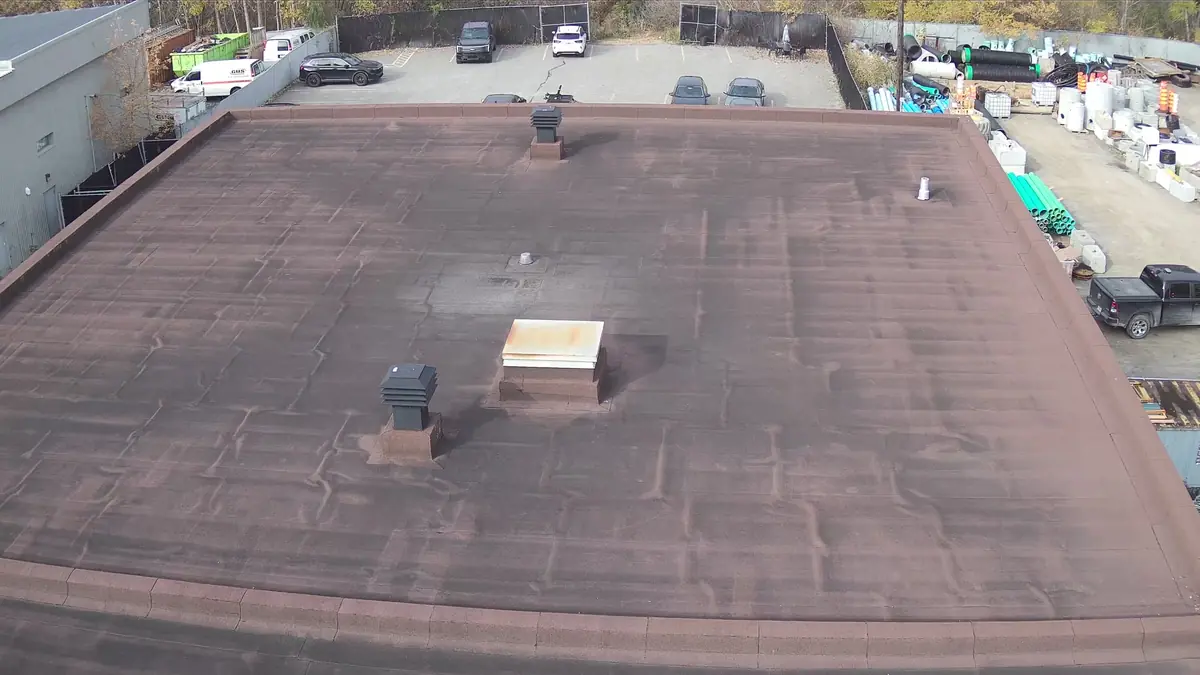
Roof and building inspection
High-definition photos and video of roofs, facades and hard-to-reach structures, with an illustrated report.
Learn more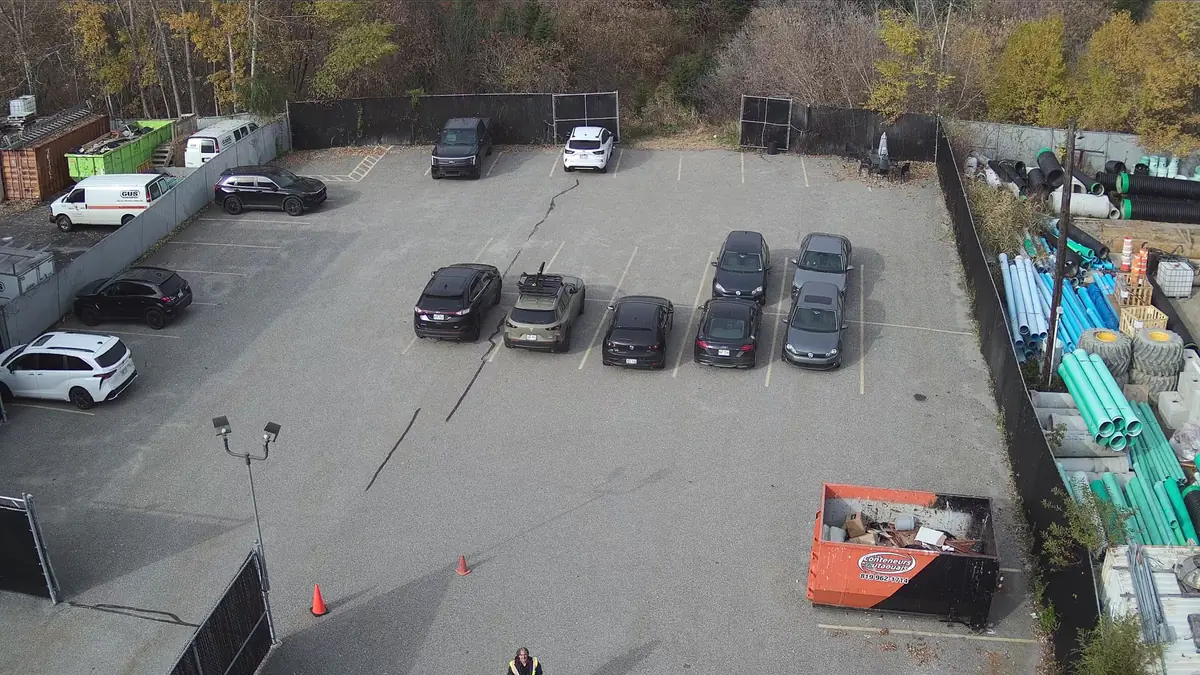
Mapping and photogrammetry
Orthomosaics, 3D models and high-resolution aerial views with the 45 MP Zenmuse P1 camera.
Learn more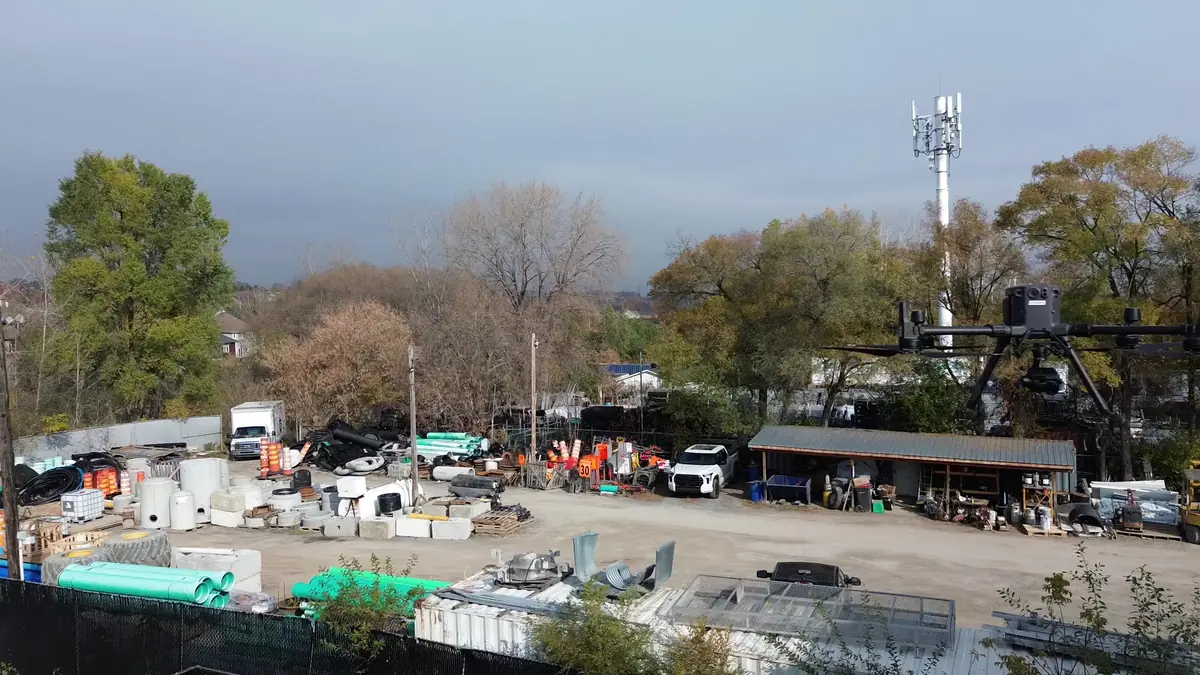
Drone LiDAR survey
3D point clouds with the Zenmuse L1 sensor, useful under vegetation and on complex terrain.
Learn moreTell us about your building, land or construction site
Describe your needs in a few lines. We check feasibility, airspace and authorizations, then send you a clear quote.